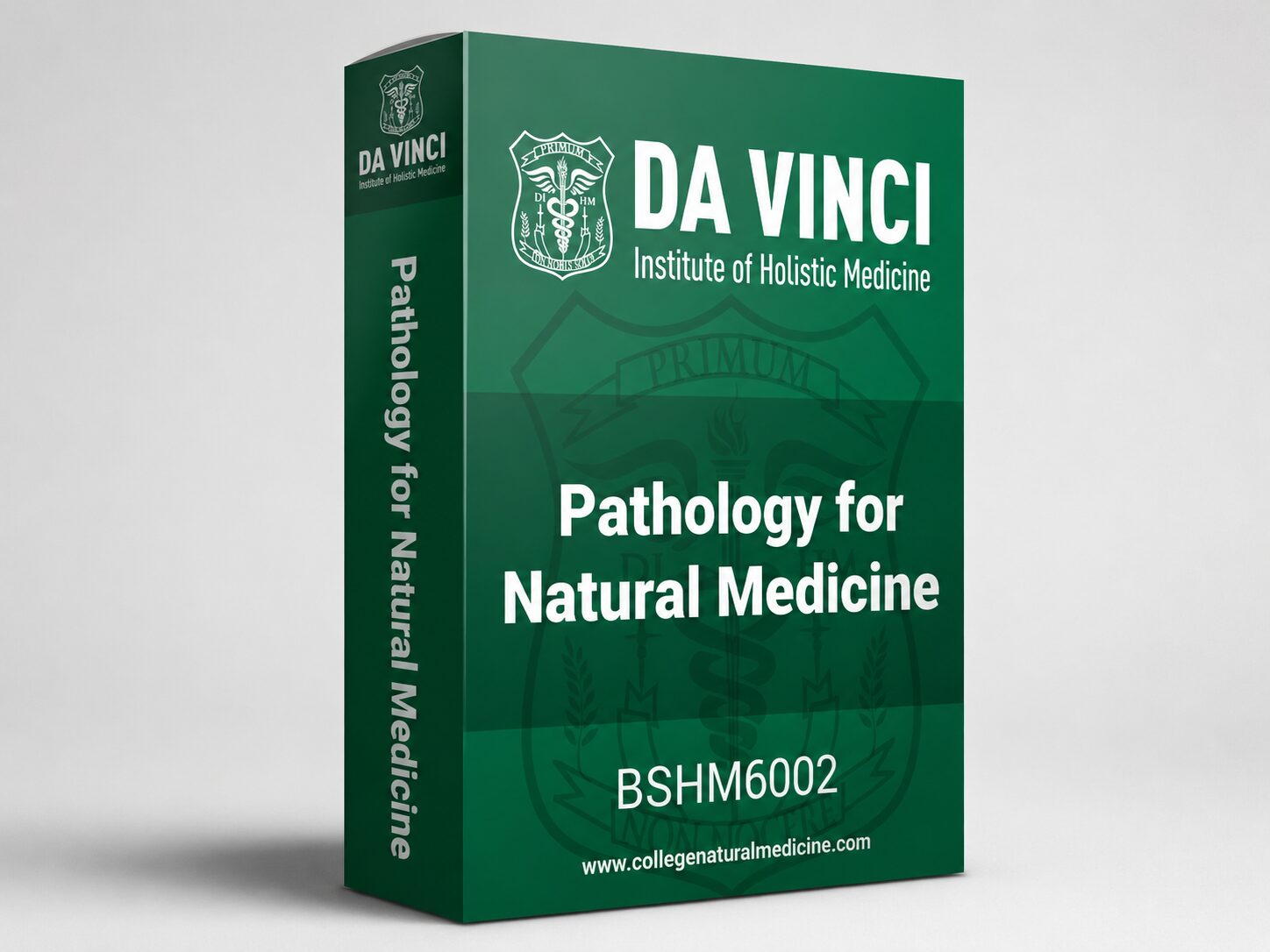
PATHOLOGY FOR NATURAL MEDICINE COURSE

(1 customer review)

810,00 

PATHOLOGY FOR NATURAL MEDICINE ONLINE COURSE

This Pathology for Natural Medicine online course is a distance learning diploma course designed to enable students and practitioners of Holistic Medicine to understand the basic principles by which orthodox medicine operates. It is important to denote that this course has been designed with the Holistic Medicine practitioner in mind and is not a general pathology course that one would encounter in a medical school curriculum.

The emphasis is on the management of cases which are commonly seen in clinical practice, together with recognition of warning symptoms which may require referral to another practitioner. This pathology course is interactive and contains a lot of material, including quizzes to really get a thorough understanding of the basic principles of pathology and differential diagnosis.
 

Pathology for Natural Medicine Course

COURSE DESCRIPTION
Pathology for Natural Medicine
1. Awarding Institution / Body: An American University
2. Teaching Institution: Online and distance learning, with tutor support
3. Programme Accredited by: American University
4. Final Award Credits for degree
5. Programme title: Pathology for Natural Medicine
6. Course Code and level: 6002
7. Duration of program: One trimester or 12 weeks
8. Total number of study hours: About 150 study hours
9. Enrollment requirements: None
10. Enrollment date: Anytime
11. Fees: Full payment: €810 euros; Instalments: 3 monthly payments of €283.50 Euros

To pay in 3 monthly instalments (€283.50/month), click the SUBSCRIBE button below:


Pathology for Natural Medicine Online Course

The Pathology for Natural Medicine Online Course is designed to help students of Naturopathy and Holistic Medicine understand the core principles of pathology and the basic framework used in conventional medicine. It has been developed specifically for the holistic practitioner and is not intended to mirror a standard medical school pathology curriculum.

The emphasis is on understanding disease processes commonly encountered in clinical practice, recognising important warning signs, and knowing when referral to another practitioner may be necessary. The course is interactive, practical, and designed to support safer, more informed case management from both a holistic and conventional perspective.

Course Structure

All course materials are provided online and include lesson content, assignments, quizzes, videos, and examinations. Each lesson contains explanatory text followed by 10 multiple-choice or true/false assignment questions, which contribute to the final grade.

No additional textbooks are required to complete the course.

Course Benefits

This course offers:

  • a practical, clinically relevant approach to study
  • lesson-based assignments to reinforce learning
  • emphasis on recognising important conditions and red-flag symptoms requiring referral
  • content tailored specifically for students of natural and holistic medicine
  • clear, easy-to-follow explanations
  • flexible study, allowing students to begin and complete the course at any time
  • self-paced learning to suit individual schedules
  • no prior medical training required
  • continuous assessment for feedback and motivation
  • a diploma certificate on successful completion
  • regularly updated content

The course is designed to help students develop a sound understanding of disease processes so they can work more safely and effectively with clients, while appreciating both conventional and holistic views of illness.

Course Curriculum

The course consists of 18 lessons:

Lesson 1 – Philosophy of Medicine

  • Philosophical View of Holistic Medicine
  • Physical, Mental, and Emotional Levels
  • How to Recognise Serious Symptoms
  • Doctors and Patients

Lesson 2 – Pathological Mechanisms

  • Inflammation, Atheroma, Haemorrhage, Thrombosis, and Oedema
  • Genetics

Lesson 3 – Clinical Testing

  • Reasons for Investigations
  • Types of Investigations
  • Blood, Serum, ECG, EEG, EMG, Pulmonary Testing, X-rays, MRI, and more
  • Interpreting Results in Context

Lesson 4 – Infectious Diseases

  • Acute and Chronic Diseases
  • Holistic View of Infectious Disease
  • Common Childhood Illnesses
  • Chronic Infectious Disease
  • Vaccination

Lesson 5 – Cancer

  • Conventional Diagnosis of Cancer
  • Conventional Treatments
  • Holistic Approaches to Cancer Support

Lesson 6 – Cardiovascular System

  • Classification of Cardiovascular Disease
  • Diseases of the Arteries
  • Ischaemic Heart Disease and Myocardial Infarction
  • Differential Diagnosis
  • Recognising Serious Cardiovascular Conditions
  • Diseases of the Lymphatic System and Blood

Lesson 7 – Respiratory System

  • Classification of Respiratory Diseases
  • Upper and Lower Respiratory Conditions
  • Wheezing Disorders

Lesson 8 – Urinary System

  • Classification of Urinary Diseases
  • Inflammatory Diseases of the Kidneys
  • Male Genital Disorders

Lesson 9 – Musculoskeletal System

  • Classification of Musculoskeletal Diseases
  • Autoimmune Disorders
  • Other Musculoskeletal Conditions

Lesson 10 – Skin Problems

  • Classification of Skin Diseases
  • Eczema, Psoriasis, Acne, Alopecia, and Vitiligo
  • Skin Infections and Infestations

Lesson 11 – Special Senses

  • Eye Diseases
  • Ear Diseases

Lesson 12 – Gastrointestinal System

  • Classification of Gastrointestinal Diseases
  • Upper and Lower GI Conditions
  • Gastrointestinal Cancers

Lesson 13 – Central Nervous System

  • Overview of the Nervous System
  • Holistic View of the Nervous System
  • Cerebrovascular Disease
  • Epilepsy
  • Multiple Sclerosis
  • Parkinson’s Disease
  • Cerebral Tumours
  • Encephalitis

Lesson 14 – The Endocrine System

  • Classification of the Endocrine System
  • Diseases of the Endocrine Glands

Lesson 15 – Psychological Disorders

  • Classification of Psychological Disorders
  • Anxiety, Hysteria, Obsessional States, and Depression
  • Holistic Management of Neuroses
  • Psychoses, including Schizophrenia and Bipolar Disorder

Lesson 16 – Pregnancy and Childbirth

  • Holistic View of Pregnancy and Childbirth
  • Supporting a Healthy Pregnancy
  • Disorders of the First, Second, and Third Trimesters
  • Labour, Delivery, and Postnatal Care

Lesson 17 – Women’s Health

  • Classification of Women’s Disorders
  • Gynaecological Conditions
  • Pelvic Inflammatory Disease
  • Menstrual Abnormalities
  • Ectopic Pregnancy
  • Ovarian Cysts
  • Infertility

Lesson 18 – Children’s Health

  • Growth and Development in Children
  • Conventional Medical Perspectives
  • Common Childhood Disorders

Examinations

A timed final exam is completed at the end of the course. Students may activate the exam when they feel ready.

Examinations are completed online, and scores are provided automatically. A minimum score of 60% is required to pass the Pathology for Natural Medicine Online Course.

Summary of Course Materials

All course materials are available online and include:

  • lesson content
  • assignments for each lesson
  • videos on each topic
  • final exam

No additional books are required.

 Anatomy and Physiology Diploma course 

These are the specifications of the Da Vinci College of Holistic Medicine’s Anatomy
and Physiology Diploma course:
1. Awarding Institution / Body: Da Vinci College of Holistic Medicine
2. Teaching Institution: Online and distance learning, with tutor support
3. Programme Accredited by: Complementary Medical Association, UK; Pastoral Medical Association, USA; The Affiliation of Ethical and Professional Therapists, UK.
4. Final Award Diploma in Anatomy and Physiology – equivalent to about 200 hours of full-time study – to view a sample of the college’s award, please click here
5. Programme title: Anatomy and Physiology Diploma
6. Course Code and level: AP101
7. Duration of programme: one semester or 16 weeks
8. Total number of study hours: 16 weeks x 12.5 hours per week = 200 hours
9. Enrollment requirements: There is no experience or previous qualifications required for enrolment on this course. It is available to all students, of all academic backgrounds
10. Enrollment date: Unlike traditional schools, colleges or universities, there are no terms, semesters, or specified intake dates for our uniquely flexible distance education courses. Our system of continuous enrolment means that our students can enroll on any day and at any time of the year. This allows our students the freedom to plan their studies to fit in with their lifestyle or work commitments.
11. Fees: Full payment: €699 euros with 20% discount = €559 euros (saving of €140 euros); Installment plan: €190 per month for 4 monthly payments.

1 review for PATHOLOGY FOR NATURAL MEDICINE COURSE

Add A Review